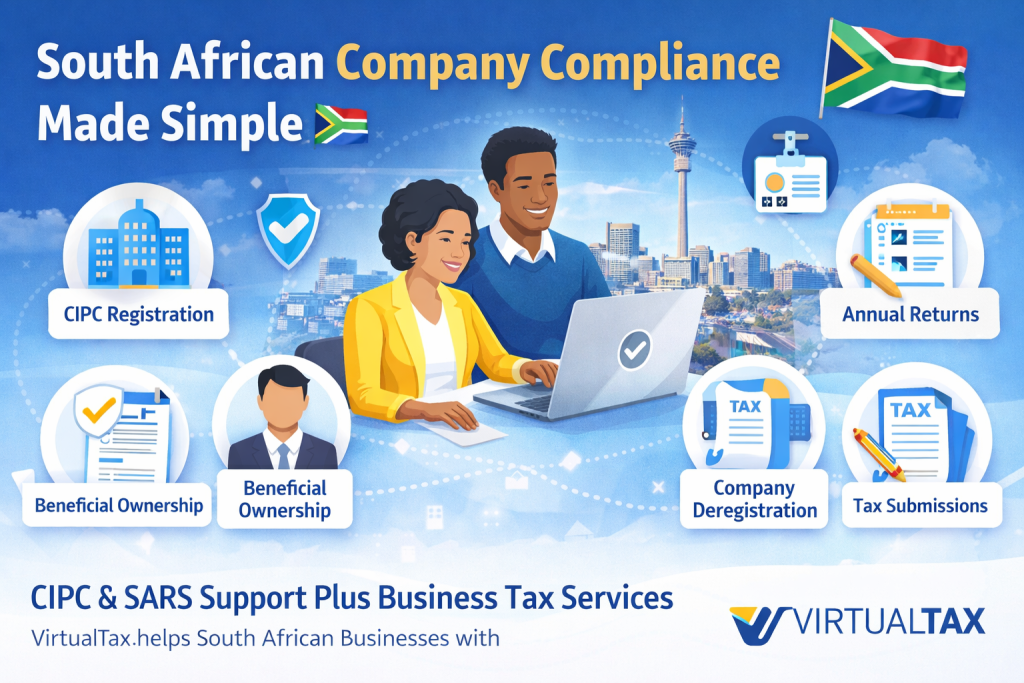
South African Company Compliance Made Simple: CIPC, SARS & Tax Support
Running a business in South Africa comes with important compliance responsibilities, but it does not have to feel overwhelming. From registering your company to keeping up with CIPC and SARS requirements, the right support can save you time, stress, and costly mistakes. At VirtualTax, we help business owners stay compliant with clear, practical services that make business administration easier.
Whether you are starting a new company, updating company details, or catching up on overdue compliance, understanding each requirement is the first step. Here is a simple breakdown of the key services every business owner should know.
CIPC Company Registration 🏢
CIPC company registration is the process of officially registering your business with the Companies and Intellectual Property Commission. This gives your business a legal identity and allows you to trade as a registered company in South Africa.
A registered company can help build trust with customers, suppliers, and financial institutions. It also creates a more professional foundation for growth. If you are starting a business, this is usually the first major compliance step.
CIPC Annual Returns 📅
CIPC annual returns are yearly submissions that keep your company active and in good standing. They are not the same as tax returns. Instead, they confirm that your company is still operating and that its details are up to date.
If annual returns are missed for too long, the company can be placed into deregistration process. That is why it is important to file them on time every year. Staying ahead of this requirement helps protect your company status and avoids unnecessary problems later.
Beneficial Ownership 👤
Beneficial ownership refers to the person or people who ultimately own or control a company. This information helps improve transparency and compliance.
For many businesses, beneficial ownership records must be kept accurate and updated. If ownership changes, the records should reflect the new structure. This is an important part of maintaining proper company governance and meeting regulatory requirements.
Director Amendments ✍️
Director amendments are changes made to the directors of a company. This may include adding a director, removing a director, or updating director details.
These changes must be recorded correctly so that company records remain accurate. If director information is outdated, it can cause delays and confusion when dealing with compliance matters, banking, or official documents. Keeping director information updated helps your business stay organised and professional.
Company Reinstatement 🔄
Company reinstatement is the process of restoring a company that has been deregistered. This is often needed when a company was removed because annual returns were not filed or other requirements were missed.
If a company has been deregistered, reinstatement may be necessary before business can continue properly. This process can be time-sensitive and often requires the correct supporting documents. Reinstatement gives business owners a chance to recover a company that still has value.
Company Deregistration 🧾
Company deregistration is the formal removal of a company from the register. This can happen voluntarily or because the company is no longer compliant.
Some business owners choose deregistration when a company is no longer needed. In other cases, deregistration happens after a long period of non-compliance. Understanding this process is important because once a company is deregistered, it may no longer be able to trade or operate normally.
SARS Public Officer Appointment 🧑💼
A SARS public officer is the person authorised to deal with SARS on behalf of a company. This is a key compliance role because SARS communicates important tax matters through the public officer.
Every company should ensure that a public officer is properly appointed and updated when needed. If the public officer changes, the information must be corrected with SARS. This helps avoid delays with tax matters and keeps communication flowing smoothly.
Tax Clearance ✅
Tax clearance is proof that a business is tax compliant with SARS. It is often needed when applying for tenders, contracts, financing, or doing business with certain organisations.
A valid tax clearance status can make a company more credible and competitive. To maintain it, tax submissions must be accurate and up to date. Businesses that stay on top of their tax affairs are usually in a stronger position when opportunities arise.
Tax Submissions 📑
Tax submissions include the returns and reports that a company must file with SARS. These may apply to different tax types depending on the business structure and activities.
Submitting tax information on time helps avoid penalties, interest, and compliance issues. It also keeps the business in good standing and gives the owner peace of mind. Good tax administration is not just about compliance; it is part of running a healthy business.
Why Compliance Matters for Growing Businesses 🚀
Compliance may seem like paperwork, but it plays a major role in business success. When your company records are accurate and your filings are up to date, you create a stronger business foundation.
Good compliance can help you secure contracts, apply for funding, build trust, and avoid unnecessary penalties. It also allows you to focus more on growth and less on admin. That is why many business owners choose support from a team that understands both CIPC and SARS requirements.
Need Help With CIPC and Tax Services? 📞
Virtual Tax helps South African businesses with company registration, annual returns, beneficial ownership, director changes, reinstatement, deregistration, public officer appointments, tax clearance, and tax submissions. Our goal is to make compliance simple, clear, and stress-free.
If you need reliable support for your business, Virtual Tax is ready to help.
❓ Frequently Asked Questions